Upstream
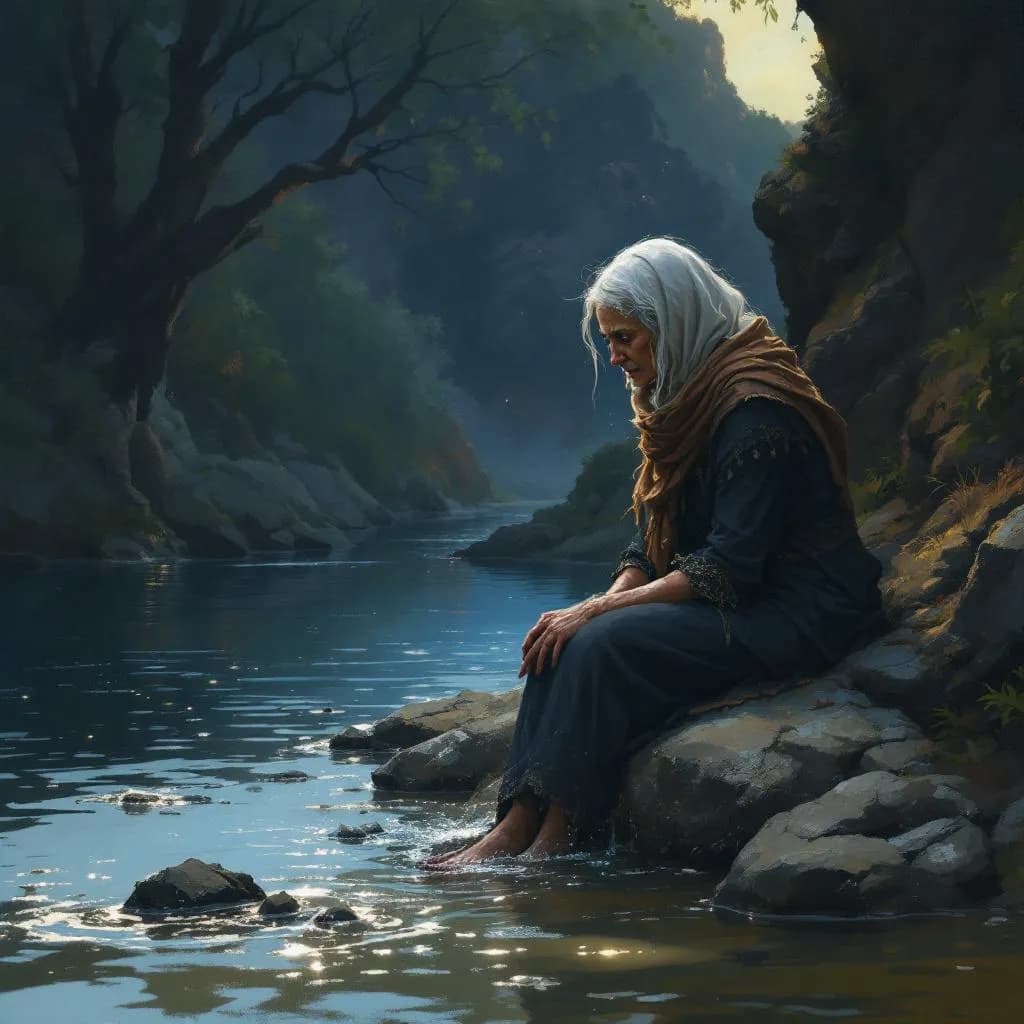
Old Korede sat at the bank with her feet in the current.
The water was still warm despite the hour. Around her, the other villagers had gone indoors — they always did on the eve of the Forgetting. They nailed their shutters and salted their doorframes and told their children not to look outside, no matter what they heard.
Korede remembered when she had believed those precautions worked.
The moon reached its highest point. She felt it before she saw it: a stillness in the water, a held breath, as if the river was deciding. Then, with a sound like a sigh carried across a very great distance, the current reversed.
The river ran upstream.
In her first Forgetting, Korede had been eight years old and had screamed. In her second she had wept. By the fourth she had stopped being afraid and started watching.
What she watched was this: the things the river carried were not debris. They were not branches or silt or fish confused by the change in direction.
They were moments. Discrete and whole, floating upstream toward their origin. A child's laughter. The smoke from a funeral pyre. The specific angle of a grandmother's hands as she braided hair in the early morning.
And tonight — for the first time in sixty years of watching — the river carried something else.
A name, written in water.
Her name.
What happens next?
Continuing adds to the main story thread. Forking creates a new parallel storyline.